Television viewing habits are expanding beyond linear broadcasting toward internet-connected devices and streaming platforms. With this transformation, CTV and OTT have become two concepts that are increasingly used in digital media planning.
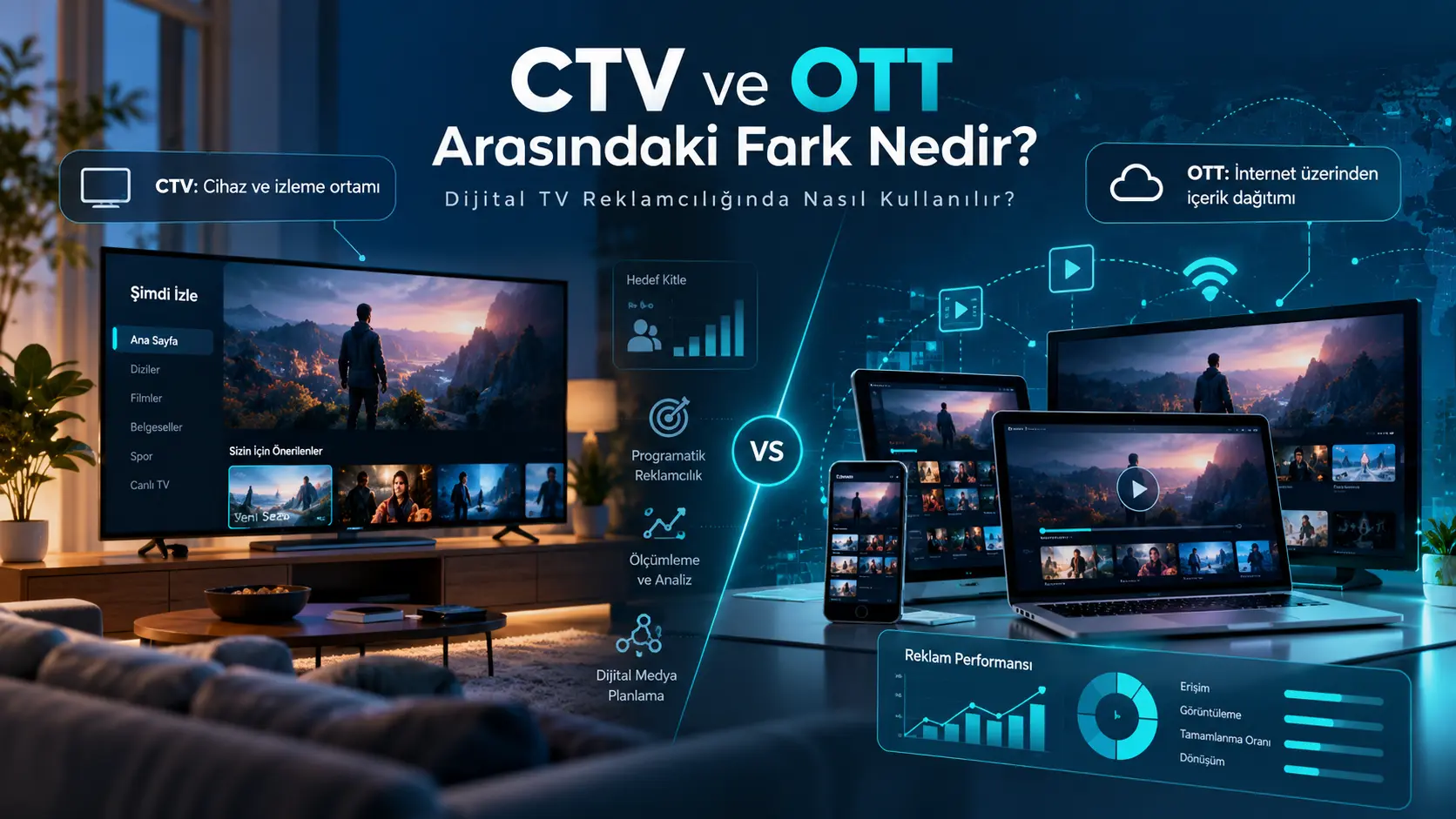
Although they are often used interchangeably, there is a fundamental difference between them: CTV refers to the device and viewing environment, while OTT refers to the method of delivering content to users over the internet.
What Is CTV?
CTV stands for Connected TV. It refers to devices such as Smart TVs, Apple TV, Chromecast, and gaming consoles that can connect to the internet and stream digital video content.
CTV advertising combines the large-screen television experience with the audience targeting, programmatic buying, and measurement capabilities of digital advertising. This allows brands to reach specific audience segments through the big screen.
What Is OTT?
OTT stands for Over-the-Top and refers to the delivery of video content over the internet, independently of traditional cable or satellite infrastructure.
OTT content can be consumed across different devices, including:
- Smart TVs
- Mobile devices
- Tablets
- Desktop computers
Therefore, OTT is not limited to the television screen. Streaming content watched on a CTV device can be part of the OTT experience, while the same content can also be consumed on a mobile device.
What Is the Main Difference Between CTV and OTT?
The key distinction lies in the device and distribution model:
- CTV: Refers to internet-connected television screens and devices.
- OTT: Refers to the delivery of content over the internet.
- CTV ads: Are displayed on large screens.
- OTT ads: Can reach users across mobile devices, tablets, desktop computers, and Smart TVs.
Both can be integrated into programmatic advertising, audience segmentation, and digital measurement processes.
How Are CTV and OTT Ads Targeted?
Targeting options may vary depending on the publisher and technology used. Common targeting methods include:
- Demographic and location targeting
- First-party data and CRM audiences
- Household targeting
- Contextual targeting
- Retargeting
This structure combines the broad reach of traditional television with the data-driven targeting capabilities of digital advertising.
Which KPIs Should Be Tracked in CTV and OTT Campaigns?
CTV and OTT campaigns should not be evaluated solely based on conversion or ROAS. Different KPIs become particularly important for objectives such as brand awareness, consideration, and incremental reach.
Key metrics that can be tracked include:
- Reach and frequency
- CPM
- Video Completion Rate
- Incremental Reach
- Website Visits and Conversions
- Brand Lift
Which Is More Suitable: CTV or OTT?
There is no single answer to this question. The choice should be based on the campaign objective, target audience, media budget, creative format, and measurement infrastructure.
CTV stands out in terms of large-screen exposure and household reach, while OTT can provide access to a broader streaming ecosystem across multiple devices. For this reason, both can be evaluated together within Advanced TV and full-funnel media planning.
For more information about our services, visit the MarkerGroupe.com website or contact us at hello@markergroupe.com.