PHP, widely used in website infrastructure, can become a target for cyberattacks due to critical security vulnerabilities. Two critical security vulnerabilities announced in October 2026 pose risks that could lead to remote code execution and allow attackers to take control of servers running certain PHP versions.
Tracked as CVE-2026-109618 and CVE-2026-109619, these vulnerabilities are associated with attackers exploiting memory management errors in the PHP runtime environment through specially crafted requests. The PHP team released security updates for affected and supported versions on October 21, 2026.
Why Are PHP Security Vulnerabilities Important?
Remote Code Execution (RCE) is a critical security issue that allows attackers to execute commands on a system without physical access or, in some scenarios, without authentication.
When such a vulnerability is exploited, files, application data, and system resources on the server may be at risk. The extent of the impact may vary depending on the server configuration, PHP version in use, and existing security measures.
Which PHP Versions Are Affected?
According to the official announcement, versions ranging from PHP 5.4 to 8.5.11 are affected by these security vulnerabilities. The fixes released for supported versions include:
- PHP 8.5.12
- PHP 8.4.27
- PHP 8.3.36
- PHP 8.2.35
PHP 8.1 and earlier versions no longer receive regular security updates from the PHP project. For systems using these versions, the options provided by the distribution provider or hosting service should be checked to access up-to-date patches; whenever possible, migration to a supported PHP version should be planned.
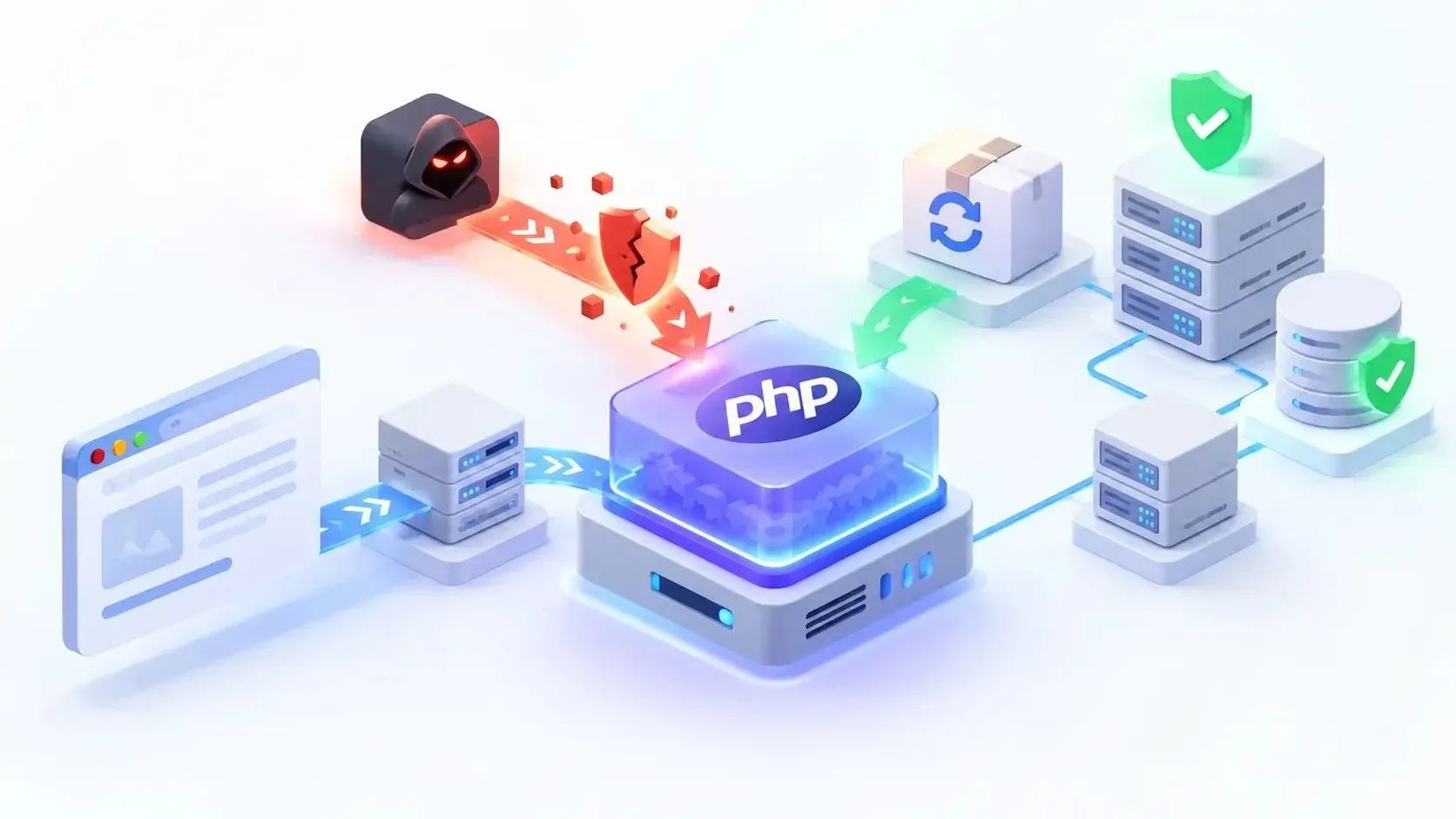
How Should Servers Be Protected Against These Vulnerabilities?
To reduce security risks, the PHP versions used on servers should first be identified, and the relevant security updates should be applied. After updating, it is also important to restart PHP processes and verify that the fix is effective.
In cases where an update cannot be applied immediately, the temporary configuration measures recommended by the PHP team may limit certain attack vectors. However, these measures do not provide complete protection and are not a substitute for security updates.
Additionally, server logs should be reviewed, unexpected process activities should be monitored, and unusual file changes should be checked. If there are signs that an attack may have occurred, simply updating the software may not be sufficient; the system should also undergo a security assessment.
The critical security vulnerabilities identified in PHP once again highlight the importance of keeping websites and server infrastructures up to date. Applying security patches promptly, upgrading outdated software versions, and regularly reviewing server logs help reduce the potential impact of attacks.
Website security is not limited to application code alone. PHP versions, server configuration, and infrastructure management should be addressed together, and necessary measures should be implemented without delay in accordance with critical security advisories.
For more information about our services, visit the MarkerGroupe.com website or contact us at hello@markergroupe.com.