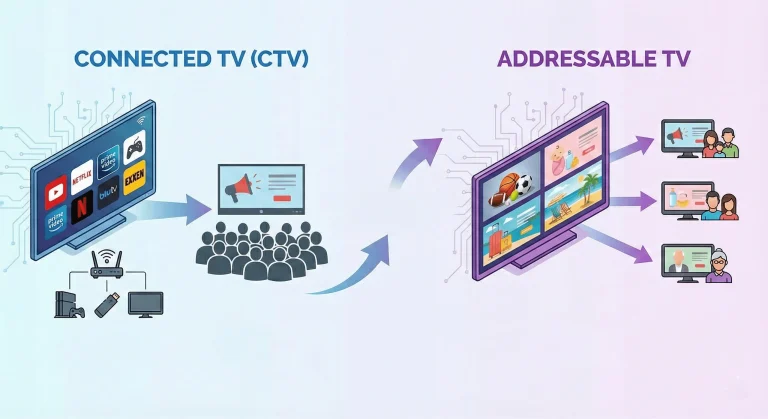
The process of defining a target audience in Addressable TV is the most critical step in making television advertising data-driven and measurable. Addressable TV targeting is a personalized TV advertising approach that delivers ad messages to the right viewers using household-level or user-level data. Thanks to this structure, brands can achieve higher impact on the TV screen with less media waste.
What Is Addressable TV Targeting?
Addressable TV targeting is the practice of analyzing demographic, behavioral, and location-based viewer data to serve ads tailored to specific audience segments. The goal is to deliver the right message to the right household.
Types of Targeting Data Used in Addressable TV
Demographic Data
- Age, gender
- Household structure
- Socio-economic segments
Interest and Behavioral Data
- Viewing habits
- Content interests
- Purchase tendencies
Location and Household-Level Data
- City, region, or micro-location
- Household type and lifestyle indicators
First-Party & Third-Party Data Usage
- First-party data: A brand’s own CRM and customer data
- Third-party data: Anonymized audience data obtained from data providers
This data structure forms the foundation of programmatic TV targeting processes.

Step-by-Step Process for Defining the Right Target Audience
Defining the Campaign Objective
- Brand awareness?
- Performance and conversions?
If the objective is not clearly defined, targeting becomes inefficient.
Target Audience Segmentation
- Primary target audience
- Secondary and potential audiences
The clearer the segments, the more effective the message.
Message–Audience Alignment
The same ad message should not be shown to every audience. Addressable TV makes it possible to tailor the message content according to each audience segment.
Strategies That Increase Targeting Accuracy with Addressable TV
- Frequency control: Preventing excessive exposure to the same household
- Timing (dayparting): Running ads during the most relevant time slots
- Cross-device data usage: Evaluating TV, mobile, and desktop data together
These strategies enhance the effectiveness of addressable TV advertising.
Incorrect Targeting Risks and Mistakes to Avoid
- Defining an overly broad target audience
- Ignoring data freshness
- Failing to adapt the message to the target audience
- Lacking frequency and timing control
A Strategic Approach to Addressable TV
When planned with the right data and targeting framework, Addressable TV transforms television advertising into a measurable and efficient communication channel. Clearly defining campaign objectives, applying accurate audience segmentation, and ensuring message–audience alignment are the cornerstones of this process.
With data-driven Addressable TV strategies, brands can create more meaningful connections on the TV screen and achieve higher efficiency from their media investments.
To learn more about Marker Groupe’s development services, visit MarkerGroupe.com or reach out to us via hello@markergroupe.com.