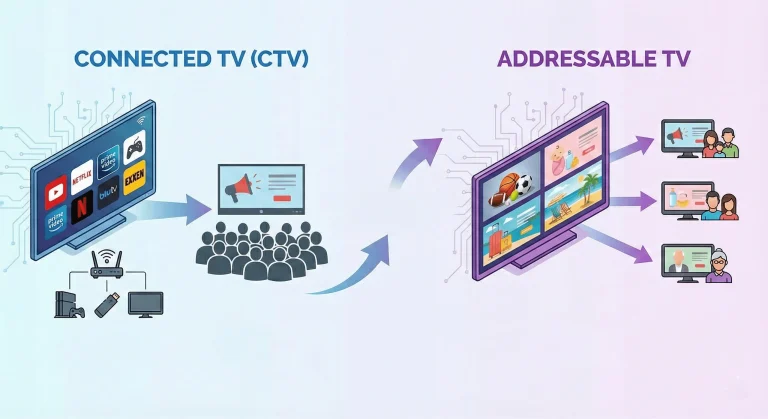
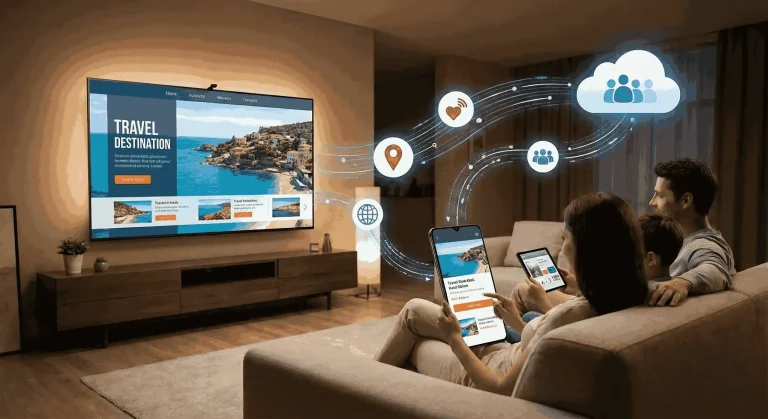
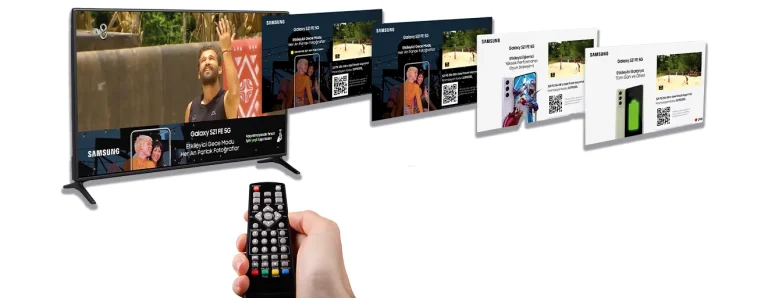
Connected TV (CTV) had long been discussed as a “rising channel.” Today, however, it is now at the center. Because CTV is not just a screen; it is a structure that combines the strongest attention space in the home with digital’s measurement, targeting, and optimization capabilities.
However, the critical point is this:
CTV is not a solution on its own. The real value emerges when it becomes part of an omnichannel media setup.
Positioning CTV in the Right Place
Treating CTV as the digital version of linear TV is the most common mistake. In fact, CTV’s role is different:
High attention on the big screen
Household- and device-based targeting
Data flow with digital channels
Measurable frequency and impact
For this reason, while CTV takes on the role of “reach” at the top of the funnel, it should function as a trigger that feeds other channels in the mid and lower layers.
The Building Blocks of an Omnichannel Setup
1. Shared Data and Identity Logic
A CTV campaign should not be an isolated media buy.
The goal is to be able to recognize the user exposed to CTV:
On mobile,
On social media,
In search,
Across web and app environments
and move them forward in a consistent way.
For this, the following are essential:
Household ID,
Device matching,
First-party data integration
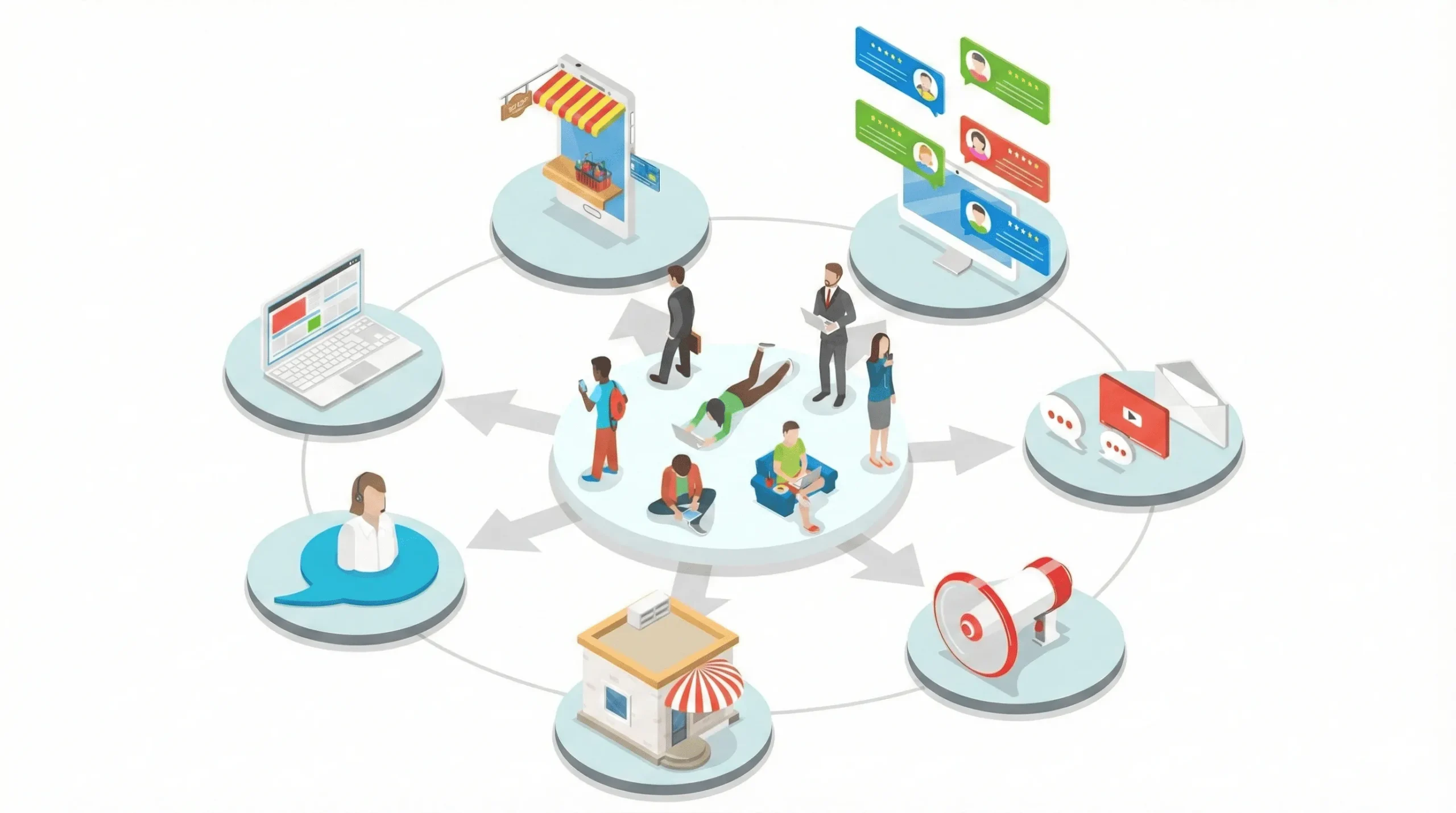
22. Message Evolution by Channel
Being omnichannel does not mean showing the same creative everywhere.
CTV: Story, emotion, positioning
Social: Short, fast, reaction-driven
Search: Need and intent
Display / Programmatic: Reminder and reinforcement
The narrative initiated on CTV should evolve into a more functional and action-oriented form across other channels.
3. Frequency and Timing Control
CTV’s strength also carries a risk: overexposure.
In an omnichannel strategy:
CTV frequency should be capped
The same user should not be exposed to meaningless repetition across different channels on the same day
Touches should be spread over time
A strong setup is built not on “being seen a lot,” but on being seen in the right sequence.
The Path from CTV to Performance
The most effective omnichannel CTV strategies generally work as follows:
CTV touchpoint
The user sees the brand on the big screen at a moment of peak attention.
Second-screen behavior
At the same time, social media browsing or search begins on mobile.
Triggered channels
Paid social
YouTube
Search
Programmatic display
Performance layer
Remarketing, offer-driven messages, and location- or need-based creatives come into play.
In this flow, CTV is not the channel that delivers the conversion; it is the channel that makes the conversion possible.
Measurement: Views Alone Are Not Enough
Success in an omnichannel CTV strategy is not measured solely by:
Completion rate
Reach
Impressions
What truly needs to be evaluated includes:
Post-CTV lift in search activity
Quality of site traffic
CPA changes in social and display campaigns
Channel-level conversion contribution (incrementality)
The real impact of CTV is understood by how it changes the performance of other channels.
Connected TV, when not structured correctly, can become an expensive showcase.
With the right omnichannel strategy, however, it:
Strengthens brand perception,
Accelerates performance channels,
Makes the entire media investment more efficient.
The issue is not being present on CTV.
The issue is playing the whole game with CTV at its core.
To learn more about Marker Groupe’s development services, visit MarkerGroupe.com or reach out to us via hello@markergroupe.com.