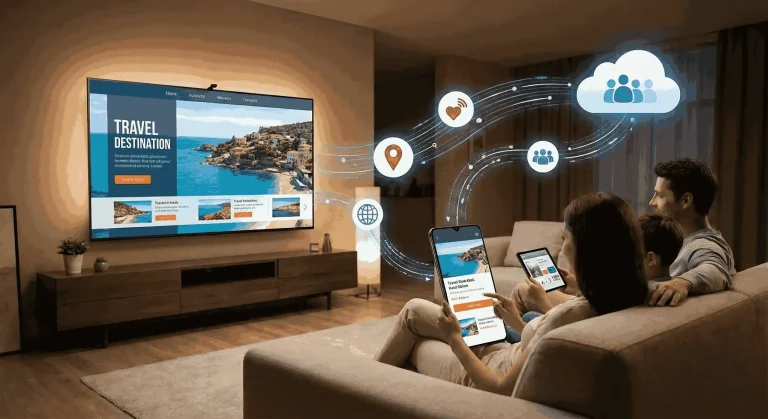
Addressable TV is a long-needed breaking point in television advertising. The ability to show different ads to different households watching the same program transforms TV from a mass medium into a controlled and measurable space. However, it is important to interpret this transformation correctly. Addressable TV is not the television version of one-to-one digital targeting; it is a household-centered model aligned with the nature of TV.
What Is Addressable TV, and What Is It Not?
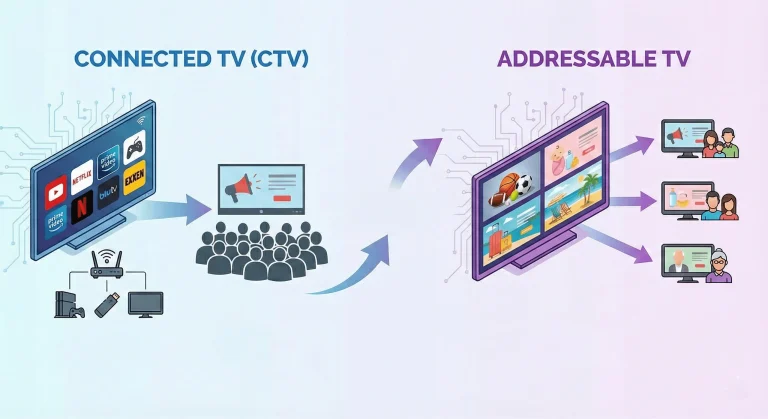
Addressable TV allows the ads within the commercial break to be replaced on a household basis without interrupting the broadcast stream. While the same match, the same series, or the same news bulletin is being watched:
Household A sees an automotive ad
Household B may watch an ad from a retail brand
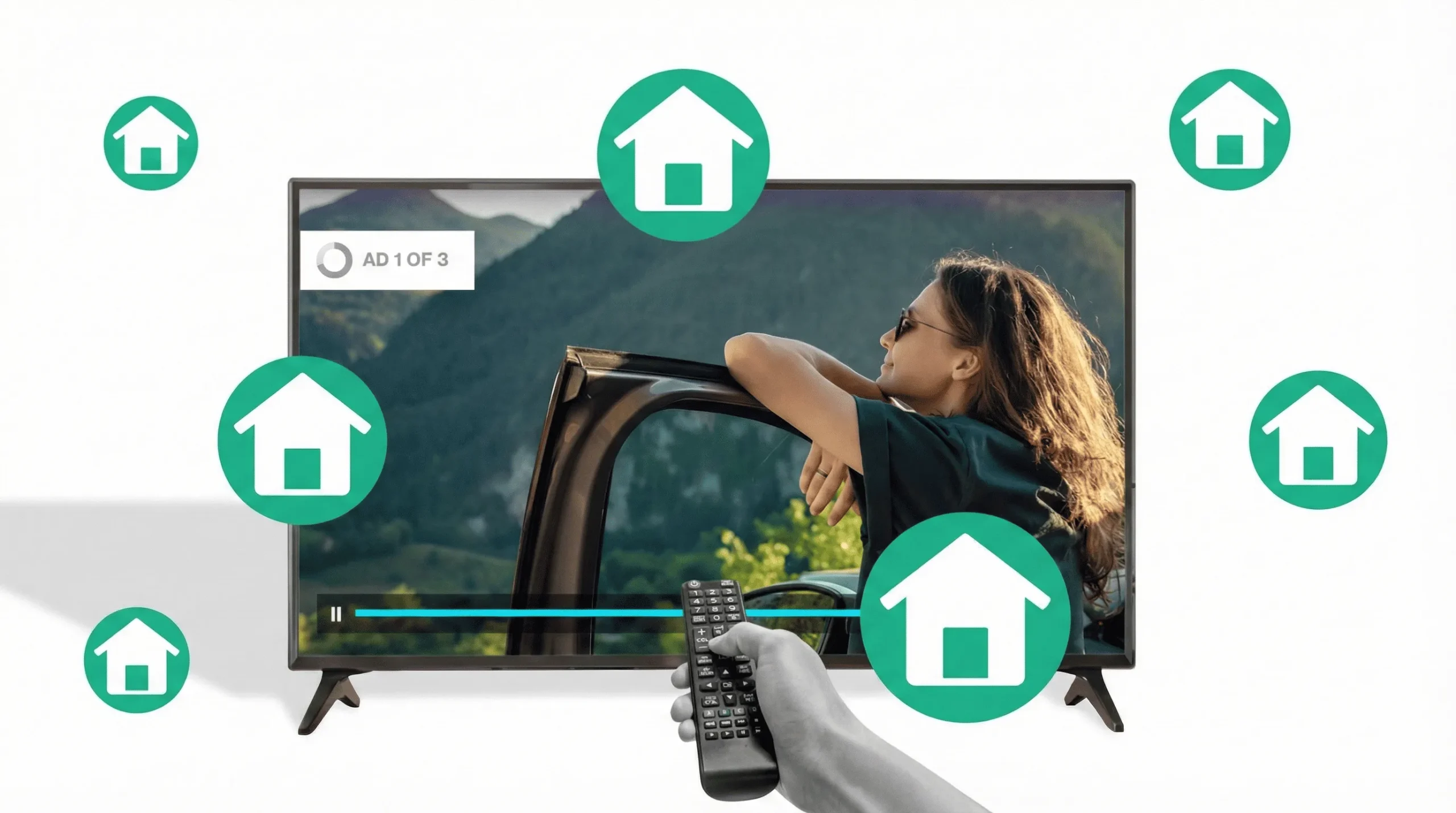
This structure targets the household, not the individual user.
An important distinction:
Addressable TV = Household-based
Digital display / social = User-based
This difference is critical for setting the right expectations.
How Does Household-Based Targeting Work?
In Addressable TV, targeting is mostly carried out through the following signals:
Set-top box or smart TV device data
Geographic location (at region, city, or neighborhood level)
Demographic modeling
Interest and lifestyle clusters
These data do not contain individual identities. Households are segmented through statistical models, and ad matching is done based on these segments.
So the system works not by asking:
“Who is in this household?”
but rather:
“Which profile clusters does this household resemble?”
Advantages of Addressable TV
- Smart Media Usage
In national TV advertising, the message reaches millions of households with no relevance. With Addressable TV, reach becomes narrower but more meaningful.
- Frequency Control
For the same household:
overexposure to ads is prevented
different messages can be delivered in a sequential manner
- Message Customization
The same campaign can run with different creatives based on:
region,
socioeconomic segment,
campaign stage
AdThe Difference Between Addressable TV and Connected TV
These two concepts are often confused.
Addressable TV is a model that operates within traditional TV broadcasting and is based on broadcaster and operator infrastructure.
Connected TV (CTV), on the other hand, operates with digital targeting logic in internet-delivered content (streaming platforms, smart TV applications).
Their common ground is that they are both household-based.
Their differences lie in infrastructure and measurement models.
How Is Measurement Done?
Measurement in Addressable TV is more advanced than in traditional TV, but not as detailed as in digital.
It is generally evaluated through:
Impressions and reach
Household-based frequency
Post-campaign lift analyses
Correlation with digital channels (increase in search, site traffic, etc.)
Conversion measurement is often indirect and requires an omnichannel interpretation.
Limitations and Realistic Expectations
Addressable TV is powerful, but it does not solve every problem:
There is no individual user targeting
Real-time optimization is limited
Inventory may be limited to the broadcaster and operator
For this reason, Addressable TV shows its true value not on its own, but when planned together with digital, CTV, and performance channels.
To learn more about Marker Groupe’s development services, visit MarkerGroupe.com or reach out to us via hello@markergroupe.com.