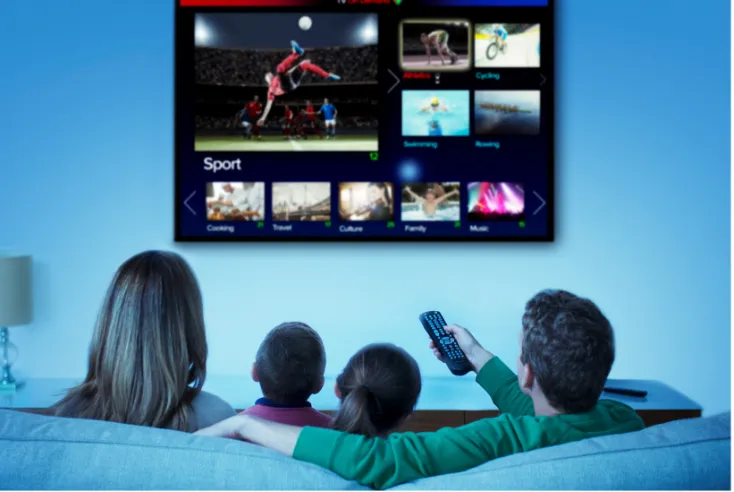
Connected TV (CTV) was long defined as “digital television.” Today, however, what truly makes the difference is not the screen itself, but the relationship it establishes with data. What makes CTV valuable in terms of personalized advertising is exactly this: big screen + digital targeting + measurability.
However, personalization on the CTV side is often misunderstood. This is not about one-to-one user tracking or individual identities; instead, it is about smart matches based on household, device, and context.
What Does Personalization Mean in CTV?
Personalization in CTV does not operate at the individual user level like it does on mobile or web. Instead, it progresses through:
Household-based targeting
Device type and platform signals
Content context (the program watched, category, time)
Geographic and behavioral clusters
The goal is for the message shown on the screen to be a more accurate reflection of:
that household,
the viewing context at that moment,
and potential areas of interest.
Household and Device Logic
In the CTV ecosystem, the fundamental unit of ad targeting is most often the household. Smart TVs, streaming devices, and platforms generate advertising signals through:
IP addresses
Device IDs
Platform-internal anonymous identifiers
This structure provides advertisers with the ability to work with models such as:
demographic estimates,
interest clusters,
lifestyle segments
However, these models are probabilistic and do not contain definitive individual data.
Dinamik Creatives: How Do They Work on CTV?
Another dimension of personalization in CTV is creative. Dynamic creative optimization (DCO) works with variations such as:
Message changes based on location
Different call-to-action texts based on time of day
Tonal adjustments based on content type
Offer emphasis based on the campaign stage
For example, the same ad can be:
more informative on weekday evenings,
more promotion-focused on weekends.
This allows a single creative to run across dozens of different scenarios.
Content Context and Meaningful Matching
One of the safest and most effective ways of personalization in CTV is contextual targeting.
Different messages perform in environments where sports content is being watched,
and different messages work in news or entertainment content.
The advantages here are:
Low privacy risk
Natural alignment with the content
Creating impact without disrupting the user experience
Context will continue to be one of CTV’s strongest personalization tools, especially in a cookieless future.
GiPrivacy and Boundaries
Personalization in CTV is powerful, but it is not limitless.
Individual user names or personal data are not targeted
Platform policies and regional regulations are decisive
Personalization is based on estimation and modeling
Therefore, the correct expectation is this:
CTV is a medium that does not say “I know you,” but rather “I catch you in the right context.”
KWhere Is the Real Contribution of Personalization?
When designed correctly, personalized CTV ads provide:
Higher recall with lower frequency
Reduced message fatigue
Performance uplift across other digital channels
Consistency in brand perception
Success here is not measured by how narrow the targeting is, but by how meaningful it is.
To learn more about Marker Groupe’s development services, visit MarkerGroupe.com or reach out to us via hello@markergroupe.com.